Imagine being a child who walks into a classroom knowing that your language, cultural background, or family heritage might determine whether you are welcome. For some children, education represents opportunity. For others, the struggle begins before the first lesson, when society decides who deserves access to learning.
A truly inclusive classroom does more than teach reading, writing, and mathematics. It gives children the opportunity to understand one another, recognize differences without fear, and develop respect for people whose experiences may be different from their own.
In Love’s Rebirth: A Tejana Story, Adria Cruz Tabor explores these ideas through the experiences of Ana Dolores Peregrino in nineteenth-century Texas. As political boundaries shift and Anglo settlement expands, cultural differences increasingly influence language, property ownership, and social relationships. Within this changing environment, education becomes a means of protecting opportunity and encouraging understanding.
Ana Dolores recognizes the growing importance of English as newcomers settle in the region. Together with Catherine Moore, she helps provide language instruction to Spanish-speaking residents of Santo Tomás. Their efforts reflect a practical understanding of education: learning new skills can help individuals navigate social change without requiring them to abandon their cultural identities.
However, language is only one part of the challenge.
When Ana Dolores is offered a teaching position at the town’s first public school, she raises an important concern. She wants assurance that children from every racial and cultural background will be accepted. Her willingness to teach depends on that commitment.
This decision reveals a principle that remains relevant today: equal educational opportunity should not depend on a child’s ancestry, language, or social position.
Inclusive education also requires recognizing that students have different learning needs. When Ana Dolores begins teaching, she evaluates her pupils and organizes them into groups according to their ages and learning abilities. Rather than expecting every student to progress identically, she adjusts her approach to accommodate differences.
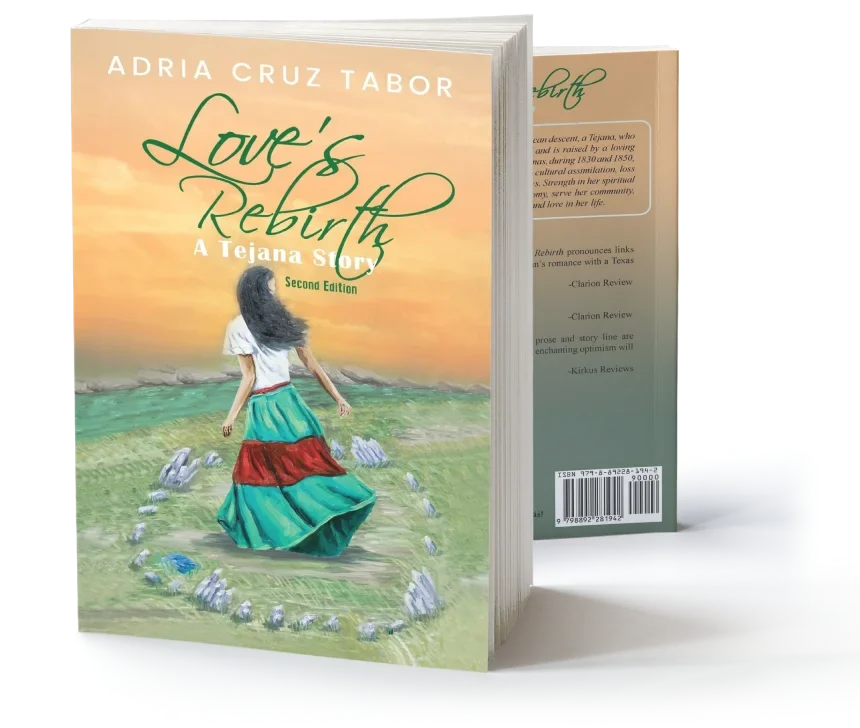
Adria Cruz Tabor presents this responsibility within a community where Mexican, Indigenous, Anglo, and immigrant families share daily life. Their relationships are not free from prejudice, but cooperation creates opportunities for understanding across cultural boundaries.
The classroom becomes especially meaningful because children carry the lessons they learn into their relationships beyond school. When young people regularly interact with classmates from different backgrounds, they have opportunities to question assumptions and recognize one another as individuals.
The experiences portrayed in Love’s Rebirth: A Tejana Story also highlight the connection between education and community responsibility. As the school grows, local leaders consider expanding its facilities and hiring another teacher, demonstrating how a community’s commitment to learning can develop over time.
For modern educators, these ideas offer practical guidance. Creating an inclusive classroom begins with welcoming different perspectives, recognizing individual learning needs, encouraging respectful discussion, and ensuring that every student has a meaningful opportunity to participate.
It also requires examining whether classroom practices unintentionally exclude particular children.
Educational inclusion cannot eliminate every form of prejudice outside school. Yet it can help establish expectations of fairness, empathy, and mutual respect that students carry into adulthood.
A stronger community begins when every child is given not only a place in the classroom, but also the opportunity to feel respected, capable, and valued.
DISCOVER A STORY OF LOVE, FAMILY, AND BELONGING
Experience a heartfelt journey through nineteenth-century Texas, where compassion, cultural heritage, and unexpected relationships reveal the enduring meaning of family.
Available in 4 Formats: Kindle eBook, Paperback, Hardcover, and Audiobook.
Get Your Copy Today: Explore the Book on Amazon
Visit the Author’s Official Website: https://adriacruztabor.com/